Everyone who used the old Omegle has the story. You hit Next, and suddenly there's something on your screen you really didn't sign up for.
We didn't want this Omegle to have that story, so every video gets checked by AI. Below is how it works, and the places where it still falls over.
And if you're wondering whether you can turn it off, that has its own section below.
Every two seconds, a quick look
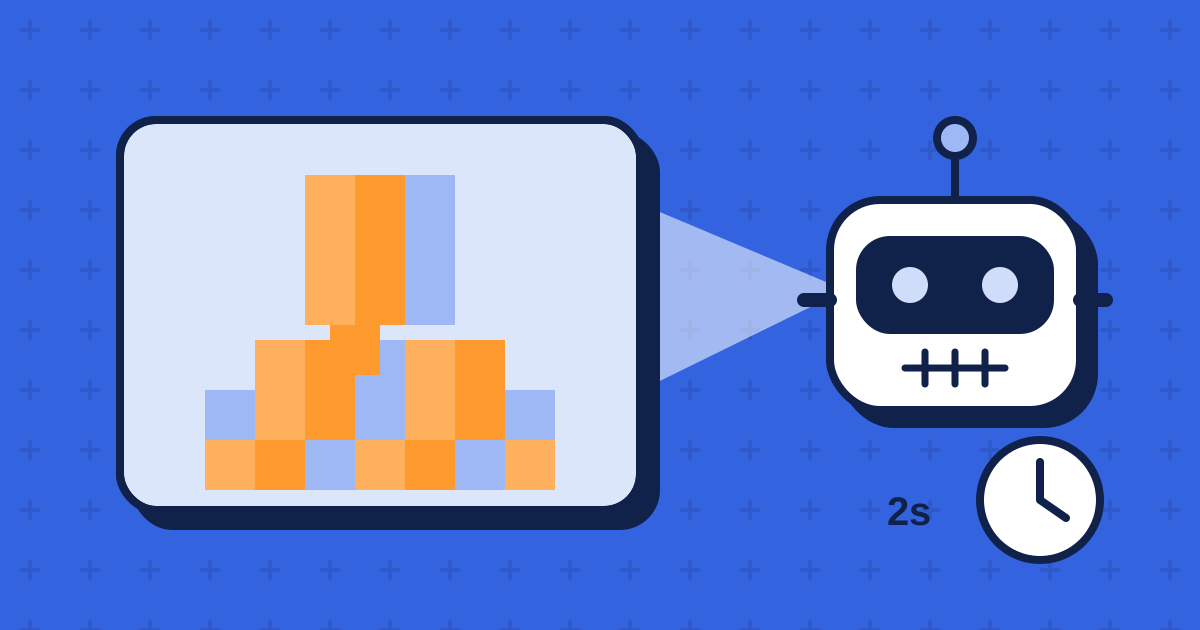
Your video runs through our server on its way to the stranger. Every two seconds the server grabs one still frame from the smallest version of your stream. Tiny picture, but it's all the AI needs, and a tiny picture is quick to check.
That frame goes to a neural network called a Vision Transformer, trained on a big pile of images labelled safe and not safe. We run an open-source image classifier instead of paying some AI service. It spits out one number: how likely it is that the frame breaks the rules. That takes less than a fifth of a second. Score 70% or more and the frame gets flagged.
It all happens on our own server. Your camera never gets shipped off to an AI company to be judged.
The Filter switch decides
During a chat there's a Filter switch next to the video. It's on by default.
With the filter on, the stranger stays hidden until the AI has cleared them. If it flags something later, their video is hidden again and you get a note instead of the picture. Yours is hidden from them too while this lasts.
Turn the filter off and you see everything, and you might get matched with people whose video was flagged. Your call.
Can I turn the filter off?
Yes. There's no separate version of this site, just the Filter switch next to the video, and it decides what you see.
Switching it off only changes what you see. Your own video is still checked, and if it gets flagged while you're talking to someone who has the filter on, they won't see you.
The rules still apply either way, and moderators can ban you for breaking them. And whatever the switch says, the stranger can record their screen. That's how sextortion starts: someone pressures you into doing something on camera, records it and asks for money. Don't pay. Our safety tips explain what to do.
Cleared gets matched with cleared
Hiding is plan B. Plan A happens before the chat even starts: with the filter on, Omegle only pairs you with strangers whose video has already been cleared.
That's why your first match can take a couple of seconds longer. The AI needs a moment to look at you, and you need someone who passed.
Caught on camera? You get 15 seconds
Yep, the AI checks you too. If your video gets flagged and the stranger has the filter on, a 15-second countdown pops up. Fix what's in frame, pass the check before it hits zero, and nothing happens. Still flagged at zero? You're moved on to someone else.
Get flagged while talking to someone with the filter on and your video is hidden from them right away. And one frame that passes won't bring it back. It takes two in a row.
Where the robot gets it wrong
It's a pretty good filter. It still screws up sometimes.
- It only looks every two seconds, so something shown for a moment in between can slip through.
- False alarms happen. Bare shoulders, swimwear or a beige wall can get your video hidden for nothing (more light and a different angle usually sort it out).
- Misses happen too. Dim rooms and weird angles can fool it.
- Video only. It doesn't read your messages or listen to your voice.
- It can't stop anyone taking screenshots or recording their screen, so our safety tips still matter.
Robots hide, humans ban
The AI has never banned anyone, and it can't. It hides and it skips. That's it.
Bans are a human call. Our moderators review recordings, can watch chats live and act on reports. The recordings keep the original, uncensored video, because a moderator has to see what actually happened. They're deleted after 30 days.
Someone got past the filter? Report them with the date and time and we'll find the chat.
Ready for a cleaner Omegle?
Keep the filter on, hit start and meet a stranger without bracing for impact.